Discover the Wild Haggis
Explore the fascinating world of the wild haggis animal and its unique habitat.
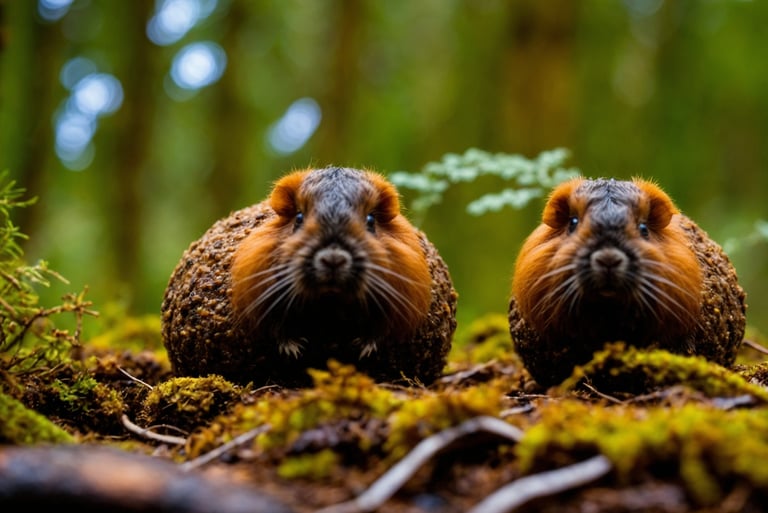

Haggis Research Network: Advancing the Study of a Scottish Legend
The Haggis Research Network brings together a range of researchers and heritage organisations committed to exploring the ecology and cultural history of the wild haggis (Haggis scoticus). Supported by the Haggis Wildlife Foundation and the Sacred Order of the Haggis, the network links independent Scottish projects under a shared goal; to document, analyse, and preserve knowledge about one of Scotland’s most distinctive folkloric species.
Its members include field ecologists monitoring populations in the Highlands, and humanities scholars examining how the haggis has shaped Scottish identity, tourism, and conservation. Together, they maintain a national archive of sightings, oral accounts, and historical references, combining modern ecological methods with cultural analysis to build a balanced record of the species.
Serving as a central repository for both scientific and narrative material, the network promotes open collaboration across disciplines to develop a more complete understanding of the haggis as both a biological curiosity and a cultural symbol.
Mission
To unite scientists, conservationists, and historians in the systematic study and preservation of the wild haggis. The network supports rigorous data collection, the safeguarding of historical and community records, and the dissemination of reliable information about the species’ ecology and heritage.
Vision
We aim for a future in which Haggis scoticus thrives in its Highland habitats and continues to hold an honoured place in Scottish culture. The Haggis Research Network seeks to be a recognised authority on the species, guiding conservation practice and encouraging public understanding of its ecological and folkloric importance.
Research and Conservation Focus
Operating under a clear scientific and conservation remit, the network investigates population genetics, habitat ecology, and the behavioural adaptations of the haggis—such as its asymmetrical leg length and hillside movement. Current projects employ non-invasive field methods, including camera traps, GPS tracking, and genetic sampling, to document diversity and distribution.
These studies are complemented by work on environmental pressures, land-use change, and the cultural narratives that continue to influence perceptions of the haggis. By integrating empirical research with traditional knowledge, the Haggis Research Network works to secure the long-term survival of this uniquely Scottish species—both in the landscape and in the national imagination.
References